4.9 Google Rating

The Modern Way to Clean AC Coils: Why Acid Washing is a Thing of the DFW Past

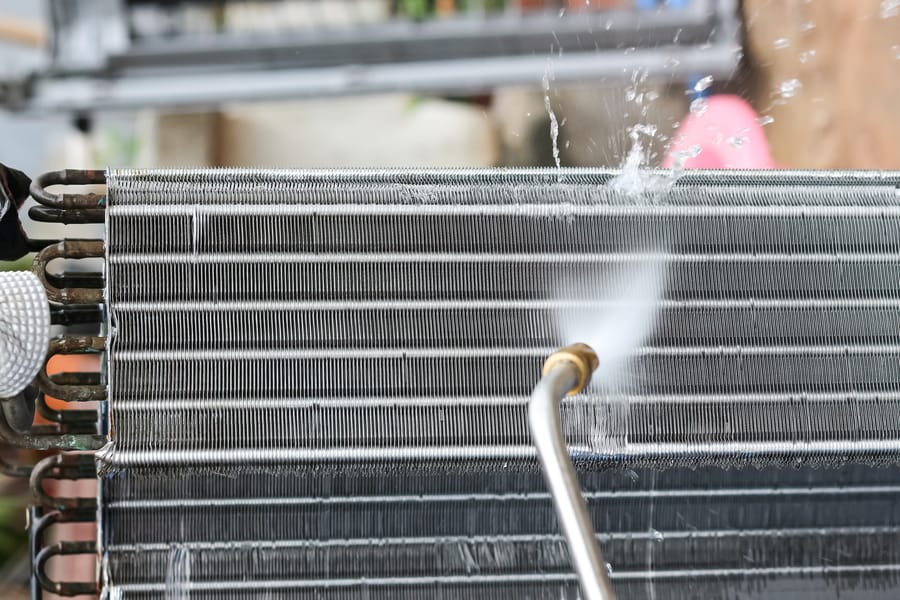
If you have lived in the Dallas-Fort Worth area for a decade or two, you probably remember the “old way” of cleaning an air conditioner. A technician would show up, spray a bright pink or blue foaming acid onto your outdoor unit, wait for it to bubble, and then rinse away the grime to reveal a shiny, “like-new” coil. For the heavy copper-tube units of the past, this was standard practice. But as we move through 2026, those harsh chemical washes have become a relic of history, and using them on a modern system can be a catastrophic mistake. At Moss Heating, Cooling & Plumbing, we’ve seen too many DFW homeowners accidentally “melt” their high-efficiency units by applying 1990s logic to 2026 technology.
The truth is that the “Heart” of your air conditioner has changed. Modern AC systems are engineered for extreme efficiency, which means they are built thinner, lighter, and out of different materials. What once worked as a deep cleaner now acts as a corrosive agent. This guide explains why “acid washing” has no place in a modern Dallas home and how you can safely protect your system from the elements without eating away at your investment.
The Shift to “Microchannel” Technology
If your air conditioner was installed in the last several years, it likely utilizes microchannel coil technology. Unlike the bulky copper pipes of yesterday, microchannel coils look more like a car’s radiator. They consist of flat, thin aluminum tubes with tiny channels running through them.
-
Superior Efficiency: These coils are roughly 40% more efficient at transferring heat than old designs.
-
Eco-Friendly: Because they are so much more effective, they require about 50% less refrigerant, which is better for the planet and your wallet.
-
Fragile Infrastructure: While they are sturdier against physical impact, the aluminum walls are significantly thinner. There is very little “extra” metal to spare, which makes them highly sensitive to chemical reactions.
The Danger of Acid Washing: It Doesn’t Just Clean; It Eats
The high-acid cleaners of the past were designed to strip the outer layer of oxidation off copper pipes. Aluminum, however, reacts very differently to acid. When you apply a traditional acidic cleaner to a modern microchannel coil, it doesn’t just remove the dirt; it begins a chemical reaction that “eats” the thin aluminum walls.
-
Pinhole Leaks: Acid causes rapid pitting corrosion. This creates microscopic “pinhole” leaks that let out your expensive refrigerant, often leading to a total system failure that cannot be repaired.
-
Warranty Voidance: Most major manufacturers (like Carrier, Trane, and Lennox) now explicitly forbid the use of acidic cleaners. If a technician or a DIY-inclined homeowner uses acid on a microchannel coil, it can instantly void your multi-year parts warranty.
-
Surface Breakdown: Even if it doesn’t cause a leak immediately, acid weakens the protective oxide layer of the aluminum, making it more vulnerable to the Texas elements and urban pollution.
The Dallas Cottonwood Crisis
Every spring in the DFW Metroplex, we deal with the “Cottonwood Blizzard.” These white, fluffy seeds are a nightmare for HVAC systems. They get sucked into the sides of your unit, creating a thick, felt-like blanket that suffocates the system.
When a unit is “choked” with cottonwood, it can’t release heat. This drives up your energy bills and puts massive pressure on your compressor. Many homeowners, frustrated by the fluff, grab the harshest chemicals they can find or a high-pressure power washer to “blast” it off. Stop. Blasting the unit with high pressure can flatten the delicate aluminum fins, permanently restricting airflow. And using harsh chemicals to “melt” the fluff often results in the coil damage we mentioned above. There is a much safer, more modern way to handle the Dallas cottonwood season.
Safe DIY Maintenance: The Homeowner’s Guide
You don’t always need a pro for a surface clean, provided you use the right technique. If you see cottonwood or dust building up, follow these safe steps:
-
The Dry Clean: Before getting anything wet, use a soft-bristled brush (like an old shoe brush) or a shop vac with a soft brush attachment. Gently brush in the direction of the fins to remove the “blanket” of fluff.
-
The Low-Pressure Rinse: Use a standard garden hose with a “fan” spray nozzle. Never use a pressure washer. Keep the nozzle at least 6 to 12 inches away from the unit.
-
Direction Matters: If possible, spray from the inside out. This pushes the dirt and seeds away from the center of the unit rather than driving them deeper into the thin channels.
When to Call Moss Heating, Cooling & Plumbing for a Professional Deep Clean
While a garden hose is great for surface fluff, it can’t reach the deep-seated “bio-film” and grease that accumulates over a long Dallas summer. At Moss Heating, Cooling & Plumbing, we use a modern, chemical-free approach to deep cleaning.
Our technicians use pH-neutral, water-based solutions that are specifically designed for microchannel technology. We don’t rely on “foaming action” to strip the metal; we use specialized low-pressure tools to gently lift away debris without compromising the integrity of the aluminum. During a professional cleaning, we also perform a full “System Health Audit,” checking your refrigerant pressures and electrical components to ensure that the cottonwood season hasn’t already caused hidden damage.
2026 Savings: Protecting Your Warranty and Your Wallet
In 2026, the cost of a full HVAC replacement in Dallas can range between $9,000 and $16,000. Protecting your existing unit has never been more financially critical.
-
Energy Efficiency: A clean coil can lower your cooling costs by up to 15% to 20% during the peak of a Texas August.
-
Longevity: Systems that are properly cleaned (without acid) consistently last 3 to 5 years longer than neglected or chemically damaged units.
-
Warranty Protection: By using Moss Heating, Cooling & Plumbing, you ensure that your maintenance records show only manufacturer-approved cleaning methods were used, keeping your warranty intact.
Modern Care for Modern Comfort
The days of “bubbling pink acid” are over. To keep your Dallas home cool in 2026, you need to treat your high-efficiency AC with the respect its technology deserves. By avoiding harsh chemicals and using gentle, consistent cleaning methods, you can protect your “Microchannel Heart” and ensure your home stays a sanctuary from the North Texas heat.
Stop the “acid attack” and give your AC the modern care it needs. Contact Moss Heating, Cooling & Plumbing today to schedule your professional, chemical-free coil deep clean.
Recent News
Why Dallas Homeowners Are Switching to Whole-Home Air Purification

What Southlake Homeowners Should Know About Whole-Home Water Filtration

Why Some Colleyville Homes Feel Dustier at the End of Summer
We Look Forward To Hearing From You.
