4.9 Google Rating

Hard Water in Dallas: What It’s Doing to Your Pipes and Your Skin

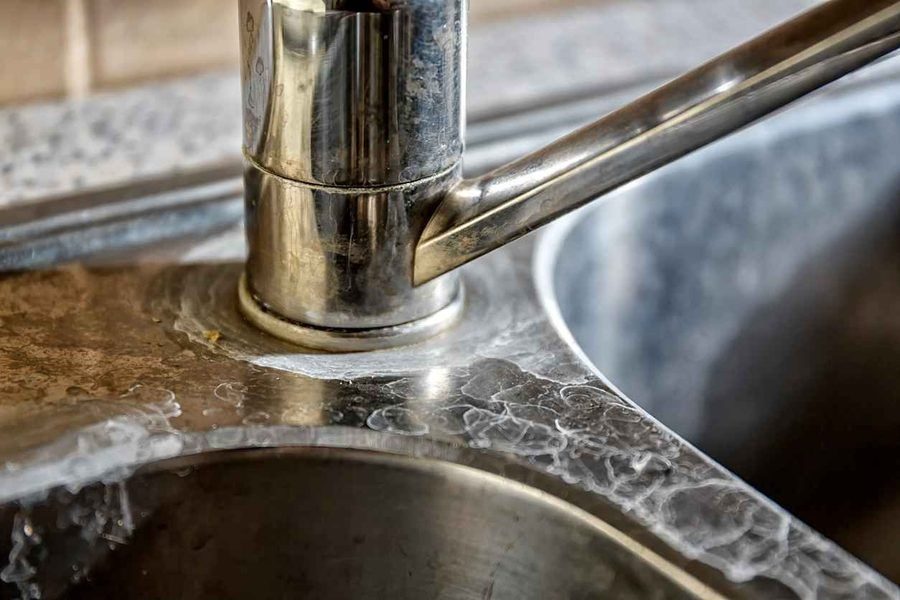
When you turn on the tap in your Dallas home, the water looks clear, crisp, and perfectly normal. Whether you are filling a glass in North Dallas, running a bath in Lake Highlands, or washing dishes in Lakewood, it is easy to assume that clean water is soft water. However, beneath that clear appearance is a geographical reality that impacts almost every property in the metroplex. Dallas water is classified as hard, containing significant amounts of dissolved calcium and magnesium.
According to reports from Dallas Water Utilities, the municipal supply averages between 140 and 160 milligrams per liter of mineral content, which translates to roughly 8 to 11 grains per gallon. This places our city water squarely in the hard-to-very-hard categories. While these dissolved minerals are completely safe to drink, they are highly destructive to your home infrastructure and incredibly harsh on your body. At Moss Heating, Cooling & Plumbing, we provide comprehensive indoor climate and plumbing assessments to help homeowners identify and correct hidden infrastructure threats. This guide will explore exactly what hard water is doing to your residential pipelines and your skin, alongside the professional interventions that work.
The Silent Plumber Nightmare: What Minerals Do to Your Pipes
Your piping network is designed to carry water smoothly under specific pressures. When hard water flows through these lines continuously, it leaves behind a chalky, rock-hard residue known as limescale. This scale acts like a cholesterol clog inside the arteries of your home.
Interior Pipe Constriction
Over years of continuous exposure, calcium carbonate bonds to the interior walls of your water lines. This problem is particularly severe in older Dallas homes that still feature legacy copper or galvanized iron pipelines.
-
Narrows the Pathway: The mineral layer thickens over time, physically narrowing the internal diameter of the pipe. A line that was once an inch wide can eventually be choked down to the thickness of a drinking straw.
-
Loss of Dynamic Pressure: As the pathway shrinks, friction increases. This causes a dramatic drop in dynamic water pressure, meaning your showers lose their driving force and appliances take twice as long to fill.
-
Accelerated Joint Leaks: The restriction of water flow forces your plumbing system to operate under higher physical stress. This extra friction puts pressure on pipe joints, elbows, and couplings, leading to hidden pinhole leaks inside your walls.
Galvanic and Under-Deposit Corrosion
Limescale does not always form a smooth, uniform coating. It often accumulates in rough, patchy deposits.
When minerals trap moisture against a metallic pipe wall unevenly, it creates a localized electrochemical cell. This process, known as under-deposit corrosion, eats away at the metal beneath the scale layer. Homeowners are often shocked when a pipe bursts, revealing that the metal rusted through completely, directly underneath a thick patch of white calcium.
The Dermatology Factor: How Hard Water Irritates Your Skin
While the damage to your pipes happens out of sight behind your drywall, the damage to your skin is something you feel every time you step out of the shower. Your skin possesses a natural, slightly acidic barrier called the acid mantle, which seals in moisture and keeps bacteria out. Hard water systematically dismantles this protection.
The Soap Scum Bond
When you mix soap or body wash with soft water, it lathers quickly and rinses away cleanly. When you mix soap with the hard water found in Dallas, a negative chemical reaction occurs.
-
Insoluble Curd Formation: The calcium and magnesium ions bind to the soap molecules, preventing them from dissolving properly. Instead of a clean lather, the mixture turns into a sticky, microscopic film often referred to as soap scum.
-
The Layer on Your Skin: This soap scum does not rinse off easily. It forms an invisible barrier over your body, clogging your pores and trapping dirt, sweat, and residual cosmetic products beneath it.
Chronic Dryness and Inflammation
Because the mineral residue clogs your pores and prevents your natural oils from distributing evenly, your skin is starved of hydration.
-
The Texan Climate Element: When you combine the drying effects of hard water with the intense summer heat and continuous air conditioning common in North Texas, your skin dries out rapidly.
-
Exacerbating Chronic Conditions: For residents dealing with eczema, psoriasis, or rosacea, hard water acts as a direct trigger. The rough mineral crystals physically irritate sensitive skin cells, leading to frequent flare-ups, redness, and intense itching.
-
Brittle Hair and Scalp Issues: The same mineral film coats your hair shafts, causing them to become brittle, dull, and prone to breaking. It also dries out the scalp, leading to persistent dandruff that medicated shampoos struggle to cure.
Recognizing Hard Water Symptoms Around the House
You do not need a laboratory test to know if your home is suffering from hard water issues. The minerals leave a distinct trail of clues across your fixtures.
-
Cloudy Glassware: If your dishes and glasses emerge from the dishwasher looking hazy, spotted, or covered in a white film, calcium is present.
-
Stiff Laundry: Clothes washed in hard water feel rough, scratchy, and lose their vibrant colors quickly because the minerals trap dirt inside the fabric fibers.
-
Fixtures Covered in Crust: Look closely at your showerhead or kitchen faucet aerator. If you see a white, green, or yellowish crust blocking the water holes, you have a severe scale problem.
-
Frequent Appliance Failure: If your water heater, washing machine, or ice maker requires frequent repairs or fails years ahead of its expected lifespan, hard water is the likely culprit.
How to Fix It Permanently: Whole-Home Solutions
Spreading expensive lotions on your skin or running chemical flushes down your drains are temporary fixes that only address the symptoms of hard water. To protect your home and your health, you must treat the water right as it enters your property.
Ion-Exchange Water Softeners
The definitive mechanical solution for hard water is a whole-home water softening system. This device is installed on your main water line before the supply splits into your water heater or home fixtures.
-
Chemical Realignment: The system utilizes a tank filled with specialized resin beads that carry a sodium charge. As the hard Dallas water passes through the tank, the calcium and magnesium ions swap places with the sodium ions.
-
Eliminating the Threat: By removing the hard minerals entirely, the water becomes soft. Soap lathers beautifully, rinses away completely, and limescale formation inside your pipes drops to zero.
Smart Maintenance of Existing Systems
If your pipes have already suffered from years of hard water buildup, installing a softener will stop the damage from worsening, but you must also maintain your existing infrastructure. Flushing your water heater annually and having a licensed professional from Moss Heating, Cooling & Plumbing inspect your pipe integrity ensures your system recovers cleanly.
Invest in Your Infrastructure and Your Health
Hard water is an ongoing challenge for Dallas residents, but it is not something you have to live with. By taking a proactive approach to your water quality, you can protect your plumbing from expensive leaks, extend the lifespan of your water-using appliances, and restore the natural health and radiance of your skin and hair.
Stop letting hidden minerals dictate the health of your home and body. Contact Moss Heating, Cooling & Plumbing today to schedule a water quality evaluation. Let our expert team deliver the reliable, honest plumbing solutions that keep your Dallas home performing at its absolute best.
Recent News
Why Dallas Homeowners Are Switching to Whole-Home Air Purification
What Southlake Homeowners Should Know About Whole-Home Water Filtration
Why Some Colleyville Homes Feel Dustier at the End of Summer
We Look Forward To Hearing From You.
